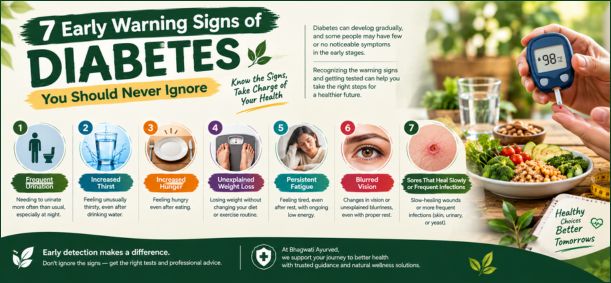
7 Early Warning Signs of Diabetes You Should Never Ignore
Diabetes can develop gradually, and some people may have few or no noticeable symptoms in the early stages. This is one reason why understanding potential warning signs is important.
You may notice that you are unusually thirsty, visiting the bathroom more frequently, feeling tired throughout the day, or experiencing changes in your vision. These symptoms can have many possible causes, but they can also occur with diabetes.
According to the National Institute of Diabetes and Digestive and Kidney Diseases (NIDDK), common symptoms can include increased urination, increased thirst and hunger, fatigue, blurred vision, sores that do not heal, and frequent infections.
In this article, Bhagwati Ayurved explores seven signs that may deserve attention and explains why proper testing is more reliable than trying to diagnose diabetes from symptoms alone.
What Is Diabetes?
Diabetes is a condition in which blood glucose, also called blood sugar, becomes too high.
The main types include:
- Type 1 diabetes
- Type 2 diabetes
- Gestational diabetes
Type 2 diabetes is the most common form and can develop slowly. Some people may have symptoms for a long time without realizing that they have diabetes.
This makes awareness and appropriate health screening particularly important.
7 Early Warning Signs of Diabetes
1Frequent Urination
One of the commonly reported symptoms of diabetes is needing to urinate more often than usual.
When blood glucose becomes too high, the kidneys work to remove excess glucose from the blood. This can contribute to increased urination.
If you suddenly notice that you are making frequent trips to the bathroom, especially at night, it is worth discussing the change with a healthcare professional.
However, frequent urination can have many other causes, so it does not automatically mean that you have diabetes.
2Increased Thirst
Frequent urination can contribute to fluid loss, which may leave you feeling unusually thirsty.
You may notice that you are drinking considerably more water than usual but still feel thirsty.
Persistent excessive thirst should not be ignored, particularly when it occurs alongside other possible symptoms of diabetes.
3Increased Hunger
Another possible warning sign is feeling unusually hungry, even after eating.
When the body cannot use glucose effectively, cells may not receive the energy they need in the usual way. This can contribute to increased hunger.
However, appetite can change for many reasons, including stress, sleep patterns, physical activity, and other health conditions.
4Unexplained Weight Loss
Losing weight without deliberately changing your diet or exercise routine can sometimes be a warning sign.
Unexplained weight loss is particularly associated with type 1 diabetes, although it can occur in other situations as well.
Safety Note
Unexpected weight loss should always be discussed with a healthcare professional because it can have many possible causes.
5Persistent Fatigue
Feeling tired after a demanding day is normal. Persistent or unusual fatigue is different.
Some people with diabetes experience ongoing tiredness.
Fatigue can also result from many other conditions, including inadequate sleep, anemia, stress, infections, nutritional deficiencies, and thyroid problems.
Therefore, fatigue alone cannot confirm diabetes.
6Blurred Vision
Changes in blood glucose can affect the way the eye focuses, potentially causing blurred vision.
If you notice unexplained or recurring changes in your vision, arrange an appropriate medical evaluation rather than assuming that the problem is simply related to tiredness or screen use.
Blurred vision is recognized as a possible symptom of diabetes.
Safety Note
Sudden or severe changes in vision require prompt medical attention.
7Sores That Heal Slowly or Frequent Infections
Some people with diabetes may experience sores that do not heal normally or more frequent infections.
Examples can include certain urinary, skin, or yeast infections.
If you repeatedly experience infections or notice that wounds are taking unusually long to heal, speak with a healthcare professional.
Can You Have Diabetes Without Symptoms?
Yes. This is particularly important to understand.
Type 2 diabetes can develop slowly, and some people have no noticeable symptoms at all. Others may have symptoms so mild that they do not recognize them as a possible health concern.
This is why people with relevant risk factors may need appropriate screening even when they feel healthy.
How Is Diabetes Diagnosed?
Symptoms alone cannot establish a diabetes diagnosis.
Healthcare professionals use blood tests to diagnose diabetes and prediabetes. Common tests include:
- A1C test
- Fasting plasma glucose test
- Oral glucose tolerance test
- Random plasma glucose test in appropriate situations
The A1C test provides information about average blood glucose levels over approximately the previous three months.
6.5%+A1C — Diabetes range
5.7–6.4%A1C — Prediabetes range
Diagnosis should be made and confirmed appropriately by a healthcare professional.
Who Should Consider Diabetes Testing?
Testing decisions depend on individual circumstances.
A healthcare professional may recommend testing based on symptoms, age, family history, body weight, previous gestational diabetes, or other risk factors.
Even people without obvious symptoms may sometimes need screening because type 2 diabetes can remain unnoticed for a long time.
If you are concerned about your risk, discuss testing with your healthcare provider.
What Lifestyle Habits Can Support Diabetes Wellness?
If you have diabetes or are concerned about your risk, healthy lifestyle habits can be an important part of overall care.
Choose Balanced MealsFocus on a varied diet containing vegetables, fruits, whole grains, pulses, appropriate protein sources, and healthy fats. Rather than following extreme diets, aim for a sustainable eating pattern that fits your individual needs.
Stay Physically ActiveRegular physical activity can support overall metabolic health. Walking, cycling, swimming, yoga, strength exercises, or other suitable activities can be incorporated according to your health and fitness level.
Maintain a Healthy WeightFor people who are overweight, appropriate weight management can be part of reducing the risk of type 2 diabetes and supporting overall health. A healthcare professional or qualified dietitian can provide individualized guidance.
Get Enough SleepConsistent, quality sleep is another important part of a healthy lifestyle. Poor sleep can affect energy, appetite, and other aspects of metabolic health.
Manage StressLong-term stress can make healthy routines harder to maintain. Activities such as meditation, yoga, breathing exercises, walking, and other relaxing practices may help support emotional well-being.
What Is the Role of Ayurveda in Diabetes Wellness?
Ayurveda has a long tradition of emphasizing balanced nutrition, daily routines, physical activity, and overall lifestyle.
Traditional Ayurvedic approaches may focus on individualized dietary and lifestyle practices as part of holistic wellness.
At Bhagwati Ayurved, we provide information about Ayurvedic approaches to diabetes and general wellness.
However, Ayurveda should not be presented as a replacement for medically recommended diabetes testing, glucose monitoring, or prescribed treatment.
Safety Note
If you are taking diabetes medication, do not stop or change it because of an Ayurvedic product or information found online.
When Should You See a Healthcare Professional?
Consider speaking with a healthcare professional if you experience several possible symptoms together, such as:
- Frequent urination
- Excessive thirst
- Increased hunger
- Unexplained weight loss
- Persistent fatigue
- Blurred vision
- Slow-healing sores
- Repeated infections
You should also discuss diabetes screening if you have known risk factors.
Early evaluation can help determine whether your symptoms are related to diabetes or another health condition.
Why Early Awareness Matters
Recognizing possible warning signs does not mean diagnosing yourself.
Instead, awareness can encourage you to seek appropriate testing when something changes.
Diabetes can affect many areas of health over time when blood glucose remains high. Appropriate diagnosis and management can help people work with their healthcare team to reduce health risks.
Conclusion
Diabetes does not always announce itself with obvious symptoms. Some people experience increased thirst, frequent urination, unusual hunger, fatigue, blurred vision, unexplained weight loss, or slow-healing sores, while others may have no noticeable symptoms.
If you recognize several of these changes, don't rely on symptoms alone. A proper blood test is the appropriate way to determine whether diabetes or prediabetes is present.
At Bhagwati Ayurved, we believe that health awareness, balanced lifestyle habits, and appropriate professional care should work together. Ayurveda can be explored as a complementary wellness approach, but diabetes diagnosis and medically recommended treatment should remain an important part of responsible healthcare.
Frequently Asked Questions
What are the first warning signs of diabetes?
Common symptoms can include increased thirst, frequent urination, increased hunger, fatigue, blurred vision, unexplained weight loss, and sores that heal slowly. Some people may have no symptoms.
Can diabetes develop without symptoms?
Yes. Type 2 diabetes can develop gradually, and some people may have few or no noticeable symptoms.
How can diabetes be confirmed?
Diabetes is diagnosed using appropriate blood tests, such as A1C, fasting plasma glucose, or other recommended tests.
Can Ayurveda replace diabetes medicine?
Ayurvedic wellness practices should not be used as a substitute for prescribed diabetes treatment. Anyone considering herbs or supplements should discuss them with a healthcare professional.
Should I get tested if I have several diabetes symptoms?
Yes. If you have possible symptoms of diabetes, discuss them with a healthcare professional and ask whether blood glucose testing is appropriate.