What Are the Early Signs of Herpes? 8 Symptoms You Should Know
A sudden tingling sensation, an unusual blister, or a painful sore can leave anyone wondering,
"Could this be herpes?"
Herpes simplex virus (HSV) is common, but many people are unfamiliar with how an initial infection or recurrent outbreak can begin. Some people experience noticeable symptoms, while others have very mild symptoms or no obvious signs at all.
Recognizing possible early symptoms can help you decide when it may be appropriate to speak with a healthcare professional and consider testing.
In this guide,
Bhagwati Ayurved explains eight possible early signs of herpes, what an outbreak may look like, and why symptoms alone cannot confirm an HSV infection.
What Is Herpes Simplex Virus?
Herpes simplex virus is a viral infection that can cause sores or blisters around the mouth, genital area, or other parts of the body.
There are two main types:
- HSV-1: Commonly associated with oral herpes, although it can also cause genital infection.
- HSV-2: More commonly associated with genital herpes.
Both types can sometimes occur in either location.
After infection, the virus remains in the body and can reactivate periodically.
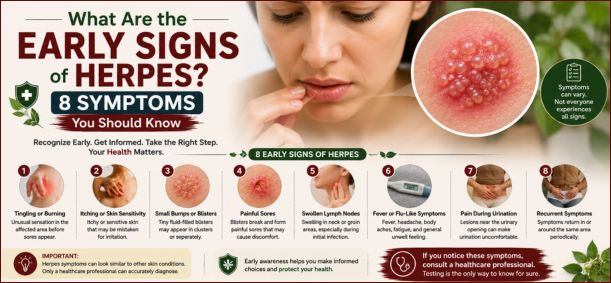
8 Early Signs of Herpes
Symptoms can vary considerably between individuals. Some people experience several symptoms, while others experience none.
1. Tingling or Burning
One of the sensations people may notice before visible sores is tingling, burning, itching, or unusual sensitivity in the affected area.
This stage is sometimes called the
prodrome.
Not everyone experiences these warning sensations, but some people recognize them before recurrent outbreaks.
2. Itching or Skin Sensitivity
The affected area may become itchy or unusually sensitive.
This can occur before visible lesions develop and may be mistaken for irritation, an allergic reaction, or another skin problem.
3. Small Bumps or Blisters
Small bumps or fluid-filled blisters may develop during an outbreak.
They can appear individually or in clusters and may occur around the lips, mouth, genital area, or nearby skin.
However, not every blister is caused by herpes.
4. Painful Sores
Blisters may eventually break and form shallow, painful sores.
Depending on their location, these sores can make eating, urinating, or normal daily activities uncomfortable.
5. Swollen Lymph Nodes
During an initial infection, some people may develop swollen lymph nodes, particularly around the neck or groin.
Swollen lymph nodes can occur with many different infections, so this symptom alone does not indicate herpes.
6. Fever or Flu-Like Symptoms
Some people experience symptoms such as:
- Fever
- Headache
- Muscle aches
- Fatigue
- General discomfort
These symptoms are more likely to occur with an initial outbreak than with every recurrence.
7. Pain During Urination
Genital herpes lesions near the urinary opening can sometimes make urination uncomfortable.
If you experience significant pain while urinating, professional medical evaluation is advisable because several different conditions can cause this symptom.
8. Recurrent Symptoms in the Same Area
People who experience recurrent herpes may notice that symptoms return in or around a similar area.
Some individuals recognize early sensations such as tingling or burning before lesions become visible.
Recurrences can vary in frequency and severity.
What Does a Herpes Outbreak Typically Look Like?
A typical outbreak may progress through several stages:
Tingling or itching → small bumps or blisters → sores → crusting/healing
However, not every outbreak follows exactly the same pattern.
Some people may experience only mild redness or a small lesion, while others may have multiple painful sores.
Can You Have Herpes Without Symptoms?
Yes.
Many people with HSV may have no noticeable symptoms or may experience symptoms so mild that they do not recognize them as herpes.
This is why the absence of visible sores does not necessarily mean that someone does not have HSV.
Are Early Herpes Symptoms the Same for Everyone?
No.
The symptoms of herpes can differ depending on:
- Whether it is an initial infection or recurrence
- The location of infection
- Individual immune response
- Previous exposure to HSV
- Overall health
Some people may experience significant symptoms, while others notice very little.
Herpes Symptoms Can Resemble Other Conditions
One reason herpes can be difficult to identify is that several other conditions can cause similar symptoms.
For example:
- Pimples
- Ingrown hairs
- Canker sores
- Contact dermatitis
- Shingles
- Other infections
This is why it is not advisable to diagnose herpes based solely on photographs or appearance.
If you have unexplained or recurring sores, a healthcare professional can assess your symptoms and determine whether testing is appropriate.
What Can Trigger Recurrent Herpes Outbreaks?
After infection, HSV remains in the body and can reactivate.
Some people report recurrences around periods of:
- Physical or emotional stress
- Illness
- Fatigue
- Poor sleep
- Hormonal changes
- Sun exposure, particularly with some oral herpes infections
- Physical irritation
Triggers differ from person to person.
Keeping track of symptoms and lifestyle factors may help you identify patterns.
When Should You Seek Medical Advice?
Consider speaking with a healthcare professional if:
- You develop unexplained genital or oral sores.
- Symptoms repeatedly return.
- You have severe pain.
- You experience significant pain while urinating.
- Lesions occur near the eyes.
- You are pregnant and develop possible herpes symptoms.
- You are concerned about recent exposure to HSV.
Testing and professional evaluation can provide more reliable information than self-diagnosis.
How Can You Support Your Overall Wellness?
While lifestyle habits cannot eliminate HSV from the body, maintaining overall health is important.
Consider:
- Eat a Balanced Diet: Include a variety of fruits, vegetables, whole grains, protein sources, and adequate fluids.
- Get Enough Sleep: Regular, quality sleep supports general physical and emotional well-being.
- Manage Stress: Meditation, breathing exercises, yoga, hobbies, and adequate rest can help manage everyday stress.
- Stay Physically Active: Regular movement supports general health and can contribute to better mood and energy.
Ayurveda and Holistic Wellness
Ayurveda takes a holistic approach to health by emphasizing balance, nutrition, daily routines, and mental well-being.
At
Bhagwati Ayurved, wellness practices may include traditional lifestyle guidance, balanced nutrition, yoga, meditation, and other approaches intended to support overall well-being.
These practices should be viewed as complementary wellness measures and should not replace appropriate medical diagnosis or treatment for herpes.
Why Health Awareness Matters
Herpes can carry considerable social stigma, often because of misinformation.
Learning the facts can help reduce unnecessary fear and encourage responsible health decisions.
An HSV diagnosis does not define a person's identity or quality of life. With appropriate information, medical guidance, and healthy habits, people can make informed choices about their health and relationships.
Conclusion
The early signs of herpes can include tingling, itching, small blisters, painful sores, swollen lymph nodes, fever, and other symptoms. However, symptoms vary widely, and many other conditions can look similar.
If you notice unexplained or recurring sores, don't rely solely on online information or photographs to diagnose yourself. Speaking with a qualified healthcare professional and discussing appropriate testing can provide greater clarity.
At
Bhagwati Ayurved, we believe that education is an important part of responsible wellness. Understanding HSV, recognizing possible symptoms, maintaining healthy lifestyle habits, and seeking appropriate professional care can help you make better-informed health decisions.