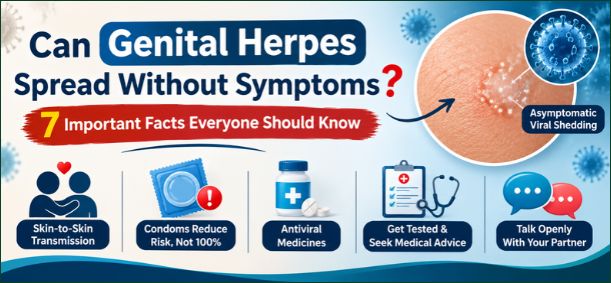
Can Genital Herpes Spread Without Symptoms? 7 Important Facts Everyone Should Know
Many people believe that genital herpes can only spread when visible blisters or sores are present. However, this is not completely true. Genital herpes can sometimes spread even when an infected person has no noticeable symptoms.
This can create confusion and concern, especially for people who have received a herpes diagnosis but do not experience regular outbreaks.
Understanding Genital Herpes Without Symptoms is important for protecting your health, informing your partner, and making responsible decisions about sexual health.
In this article, we explain how herpes can spread without visible symptoms, why it happens, and what steps can help reduce the risk of transmission.
Genital herpes is a sexually transmitted infection (STI) caused by the herpes simplex virus, commonly known as HSV.
There are two main types:
HSV-1
Commonly associated with oral herpes, but it can also cause genital herpes.
HSV-2
A common cause of genital herpes and recurrent genital outbreaks.
Some people infected with HSV experience painful blisters, sores, itching, or burning. Others may have very mild symptoms or no noticeable symptoms at all.
When a person has the virus but does not experience visible signs, the infection may be described as asymptomatic genital herpes.
However, the absence of symptoms does not always mean that the virus is inactive.
Can Genital Herpes Spread Without Symptoms?
Short Answer
Yes. Genital herpes can spread even when there are no visible sores or noticeable symptoms.
This can happen through a process called asymptomatic viral shedding.
During viral shedding, the herpes simplex virus becomes active on the skin or mucous membranes and may be transmitted through intimate skin-to-skin contact.
A person may not notice anything unusual during this period. This is one reason why some people discover they have genital herpes only after a partner receives a diagnosis or they undergo medical testing.
7 Important Facts About Genital Herpes Without Symptoms
1Herpes Can Spread Without Visible Sores
Visible blisters are not necessary for herpes transmission.
The virus may be present on the genital skin even when the skin looks completely normal.
This means a person who feels healthy and has no visible outbreak may still transmit HSV to a sexual partner.
2Asymptomatic Viral Shedding Can Occur
Asymptomatic viral shedding happens when HSV becomes active and is released from the infected skin without causing noticeable symptoms.
This process can occur occasionally, making transmission possible even when there are no visible signs of infection.
People with genital HSV-2 may experience asymptomatic shedding more frequently than people with genital HSV-1.
3Some People Never Recognise Their Symptoms
Not everyone experiences typical herpes blisters or painful sores.
Some people may mistake mild symptoms for:
Minor skin irritation
Ingrown hairs
Small cuts
Itching or redness
Other common genital skin conditions
Because symptoms can be mild or unrecognised, some people may not know they have herpes.
4HSV-1 and HSV-2 Can Behave Differently
Both HSV-1 and HSV-2 can cause genital herpes, but their recurrence patterns may differ.
Genital HSV-2
Generally causes more frequent recurrences and genital viral shedding than genital HSV-1.
Genital HSV-1
Usually has fewer recurrences over time, although transmission without symptoms can still occur.
Understanding which HSV type is involved can help a healthcare professional explain the likely pattern of infection.
5Condoms Can Reduce but Not Eliminate Transmission Risk
Using condoms correctly and consistently can reduce the risk of genital herpes transmission.
However, condoms do not cover every area of genital skin. Therefore, transmission may still occur through contact with infected skin that is not covered.
Combining safer sexual practices with honest communication and medical guidance can help reduce risk.
6Antiviral Medicines Can Help Manage Genital Herpes
Antiviral medicines such as acyclovir, valacyclovir, and famciclovir are commonly used to manage genital herpes.
Depending on a person's symptoms and medical history, a healthcare professional may recommend:
Episodic treatment during an outbreak
Daily suppressive treatment for recurrent symptomatic herpes
Individualised advice about reducing transmission risk
Daily suppressive antiviral therapy can reduce HSV-2 transmission risk in certain people with symptomatic genital herpes.
Note
The effectiveness of suppressive treatment for preventing transmission in people with entirely asymptomatic HSV-2 infection has not been established.
7Honest Communication With Your Partner Is Important
A genital herpes diagnosis can create anxiety about relationships and intimacy.
However, avoiding the discussion does not remove the risk of transmission.
Consider discussing the diagnosis with your partner before sexual activity. You can also consult a healthcare professional together to understand testing, prevention, and treatment options.
Open communication helps both partners make informed decisions without unnecessary fear or judgement.
How Can You Reduce the Risk of Spreading Genital Herpes?
Although the risk cannot be completely eliminated, certain precautions can help reduce transmission:
Avoid sexual contact during visible outbreaks.
Avoid sexual activity when warning symptoms such as tingling, burning, or itching occur.
Use condoms consistently and correctly.
Discuss your HSV status with your sexual partner.
Consult a healthcare professional about appropriate antiviral treatment.
Do not share unverified information about home remedies or treatments.
Seek medical advice if you notice new or unusual genital symptoms.
Remember that transmission can still occur during periods without symptoms.
How Is Asymptomatic Genital Herpes Diagnosed?
Diagnosing genital herpes can be challenging when no visible sores are present. A healthcare professional may recommend different tests depending on the person's symptoms and medical history.
PCR or Swab Test
If a person has an active blister or sore, a healthcare professional may collect a sample from the affected area for a laboratory test. PCR testing can help identify HSV and determine its type.
Type-Specific Blood Test
A type-specific HSV blood test may be considered in selected situations, such as when a person's partner has genital herpes or when there is a history of symptoms without laboratory confirmation.
Safety Note
Blood tests have limitations. They may produce false-positive results, and they cannot identify exactly when the infection occurred. Routine herpes blood testing is not recommended for everyone without symptoms. Discuss the benefits and limitations with a qualified healthcare professional before testing.
Does Genital Herpes Without Symptoms Require Treatment?
Not every person with asymptomatic genital herpes requires daily antiviral medication.
Treatment decisions depend on factors such as the HSV type, medical history, symptoms, recurrence pattern, and concerns about transmission.
For people with symptomatic genital herpes, antiviral treatment can help manage outbreaks and, in selected cases, reduce transmission risk.
People diagnosed through blood testing who have never experienced symptoms should discuss the available evidence and treatment options with their healthcare professional.
Safety Note
Do not start or stop medication without medical advice.
Can Ayurveda Support People Living With Genital Herpes?
Many people explore Ayurveda because they are interested in traditional healthcare and overall wellness.
At Bhagwati Ayurved, we recognise the importance of informed decisions and individual guidance when exploring Ayurvedic wellness approaches.
A balanced diet, adequate sleep, stress management, and healthy lifestyle habits can support general well-being. However, these measures have not been proven to eliminate HSV or prevent asymptomatic viral shedding.
Safety Note
Any Ayurvedic or herbal product should be discussed with a qualified practitioner, particularly if you are already taking antiviral medication. Ayurvedic approaches should not replace medically recommended diagnosis, treatment, or transmission-prevention advice.
Final Thoughts
Genital herpes without symptoms is an important aspect of sexual health that many people do not understand.
The absence of visible blisters or sores does not guarantee that the virus cannot spread. Asymptomatic viral shedding makes transmission possible even when an infected person feels completely normal.
Understanding HSV, using appropriate precautions, communicating openly with partners, and seeking professional medical guidance can help people manage genital herpes responsibly.
At Bhagwati Ayurved, we encourage readers to make informed healthcare decisions and explore wellness approaches with realistic expectations.
Medical Disclaimer: This content is provided for general educational purposes only and is not a substitute for professional medical advice, diagnosis, or treatment.
Frequently Asked Questions
Yes. Some people have genital HSV infections without recognising any symptoms or experiencing noticeable outbreaks.
Yes. Asymptomatic viral shedding can allow the virus to spread even when no visible sores are present.
No. The virus can become active and shed from the skin without producing noticeable symptoms.
No. Condoms reduce the risk but cannot provide complete protection because HSV can spread through skin contact in areas not covered by a condom.
Speak with a healthcare professional. They can assess your exposure and recommend whether testing is appropriate. Testing too soon after exposure may not detect an infection.
Currently, there is no established cure that removes HSV from the body. Antiviral medicines can help manage the infection and reduce outbreaks.