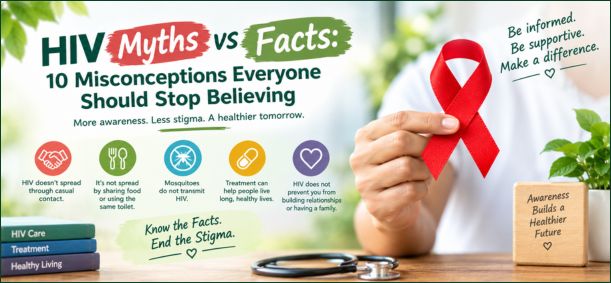
HIV Myths vs Facts: 10 Misconceptions Everyone Should Stop Believing
Despite advances in HIV testing, treatment, and public awareness, many misconceptions about HIV still exist. Some people believe HIV can spread through casual contact, while others think an HIV diagnosis means a person cannot live a long and fulfilling life.
These misunderstandings can create unnecessary fear, discrimination, and confusion about medical care.
Understanding the difference between HIV myths and facts is an important step towards building awareness and treating everyone with dignity and respect.
At Bhagwati Ayurved, we believe reliable health information helps people make informed decisions. In this article, we explore 10 common misconceptions about HIV, explain what medical evidence says, and answer important questions about transmission, testing, treatment, and everyday life.
HIV spreads through hugging, shaking hands, or ordinary physical contact.
✓
Fact
HIV does not spread through ordinary physical contact.
Hugging, shaking hands, sitting beside someone, or sharing everyday social spaces does not transmit HIV.
The virus spreads through specific body fluids, including blood, semen, vaginal fluids, rectal fluids, and breast milk, under particular circumstances.
You can comfortably interact with a person living with HIV without worrying about transmission through ordinary contact. Fear of casual contact is not supported by scientific evidence and can contribute to unnecessary stigma.
2HIV Can Spread by Sharing Food or Using the Same Toilet
✕
Myth
Sharing meals, utensils, or toilet facilities spreads HIV.
✓
Fact
Sharing meals, utensils, or toilet facilities does not spread HIV.
People sometimes worry about eating food prepared by someone living with HIV or using the same bathroom.
HIV is not transmitted through food, drinking glasses, plates, cutlery, toilet seats, or everyday household contact.
There is no reason to exclude someone from family meals, workplace activities, school, or social gatherings because they are living with HIV. Accurate information can help replace fear with understanding and encourage supportive relationships.
3Mosquitoes Can Transmit HIV
✕
Myth
Mosquito bites can transmit HIV from one person to another.
✓
Fact
HIV is not spread through mosquito bites.
Mosquitoes do not transmit HIV. The virus does not reproduce inside mosquitoes in a way that enables them to pass it to another person.
This means that being bitten by a mosquito that has previously bitten a person living with HIV does not put you at risk of acquiring HIV.
This is an important distinction because HIV transmission requires specific routes of exposure, not ordinary insect bites.
4You Can Always Recognise HIV by Looking at Someone
✕
Myth
A person's appearance can tell you whether they have HIV.
✓
Fact
A person's appearance cannot tell you whether they have HIV.
Some people experience flu-like symptoms soon after acquiring HIV, while others may have no noticeable symptoms for a long time.
Symptoms such as fever, fatigue, sore throat, or swollen lymph nodes can occur for many different reasons. They cannot confirm HIV on their own.
Similarly, someone who appears completely healthy may still be living with HIV. If you are concerned about a possible exposure, seek appropriate testing and medical advice rather than relying on symptoms or appearance.
5An HIV Diagnosis Means a Person Cannot Live a Long Life
✕
Myth
An HIV diagnosis means a person cannot live a long life.
✓
Fact
Effective HIV treatment helps many people live long, healthy lives.
An HIV diagnosis can be emotionally challenging, but it does not mean that someone cannot work, study, maintain relationships, or plan for the future.
Antiretroviral therapy (ART) helps control HIV and protects the immune system. With appropriate treatment, medical monitoring, and ongoing care, many people living with HIV can maintain good health for many years.
Starting treatment promptly and taking prescribed medicines consistently are important parts of managing HIV.
HIV is the virus, while AIDS is the most advanced stage of HIV infection.
HIV stands for human immunodeficiency virus. It attacks the body's immune system, particularly CD4 cells that help the body fight infections.
AIDS stands for acquired immunodeficiency syndrome. It refers to the most advanced stage of HIV infection.
Not everyone who has HIV develops AIDS. Effective antiretroviral treatment can prevent or delay progression to advanced disease and help protect immune function. This is one reason early diagnosis, appropriate treatment, and regular medical follow-up are so important.
7HIV Treatment Is No Longer Necessary Once You Feel Better
✕
Myth
Once you feel healthy, you can stop taking HIV treatment.
✓
Fact
Feeling healthy does not mean HIV has disappeared from the body.
HIV treatment can reduce the amount of virus in the blood to very low levels. A person may feel well even while HIV remains in the body.
ART must be continued according to the prescribed treatment plan. Stopping treatment or repeatedly missing doses can allow the virus to multiply and may contribute to drug resistance.
If you experience side effects, struggle with your medication schedule, or have concerns about your treatment, contact your healthcare professional rather than making changes yourself.
Our page about treatment for HIV provides further reading on treatment and ongoing medical care.
8HIV Has No Effective Treatment
✕
Myth
There is no effective treatment available for HIV.
✓
Fact
Modern HIV medicines can control the infection.
Although there is currently no generally available cure for HIV, effective antiretroviral therapy can suppress the virus and help people maintain their health.
Treatment plans are personalised by qualified healthcare professionals. Regular monitoring helps assess treatment effectiveness and identify any issues that require attention.
People who have questions about medicines, side effects, or treatment options should discuss them with their treating clinician.
9People With an Undetectable Viral Load Can Still Transmit HIV Sexually
✕
Myth
A person with an undetectable viral load can still transmit HIV through sex.
✓
Fact
People who maintain an undetectable viral load on effective HIV treatment do not transmit HIV through sex.
This scientifically established principle is known as U=U, or Undetectable = Untransmittable.
U = UUndetectable equals Untransmittable
When a person takes ART as prescribed and maintains an undetectable viral load, there is zero risk of sexual transmission of HIV.
Regular viral load monitoring helps the healthcare team assess whether treatment is working and whether the undetectable level is being maintained.
U=U is an important public health message because it supports accurate awareness, reduces stigma, and helps people make informed decisions about their sexual health. It does not mean HIV has been cured, and it does not prevent other sexually transmitted infections.
10Herbal Products or Special Diets Can Cure HIV
✕
Myth
A special diet or herbal product can cure HIV.
✓
Fact
No special diet or Ayurvedic product has been established as a cure for HIV.
A balanced diet, physical activity, adequate sleep, and emotional support can contribute to overall well-being. However, these practices cannot replace antiretroviral therapy.
Some herbal products and supplements may also interact with prescription medicines. Anyone considering complementary products should discuss the ingredients with their HIV healthcare professional or pharmacist before use.
Safety Note
Avoid products that promise a guaranteed HIV cure or advise stopping prescribed medicines.
Why Is It Important to Separate HIV Myths From Facts?
Misinformation about HIV can have consequences beyond incorrect knowledge. It may discourage people from seeking testing, delay medical care, or lead to discrimination against people living with HIV.
Accurate information can help people:
Understand genuine HIV transmission risks
Seek testing when appropriate
Access effective medical treatment
Support friends and family without unnecessary fear
Make informed decisions about sexual health
Recognise misleading claims about HIV cures
HIV awareness should be based on scientific evidence, respect for privacy, and compassion for everyone affected by the condition.
How Can We Support People Living With HIV?
Everyone can contribute to a more informed and supportive environment.
Share Accurate Information
Use reliable medical sources instead of unverified social media posts.
Respect Privacy
A person's HIV status is private health information. Do not disclose it without their permission.
Avoid Discrimination
HIV does not spread through ordinary social contact, so people living with HIV should not be excluded from everyday activities.
Encourage Appropriate Healthcare
Support people in accessing testing, treatment, counselling, and follow-up care without judgement.
Question Unrealistic Claims
Be cautious of advertisements promising guaranteed cures or suggesting that proven treatment is unnecessary.
At Bhagwati Ayurved, responsible health awareness means encouraging informed choices and recognising the importance of appropriate medical care.
Conclusion
HIV myths can create fear, confusion, and stigma, but reliable information can help people understand the facts.
HIV does not spread through hugging, sharing food, using the same toilet, or mosquito bites. Effective treatment helps people living with HIV maintain their health, and people who sustain an undetectable viral load on ART do not transmit HIV through sex.
At Bhagwati Ayurved, we encourage readers to rely on credible health information, seek appropriate medical guidance, and treat people living with HIV with dignity and respect.
The more accurately we understand HIV, the better equipped we are to replace myths with facts and stigma with support.
Medical Disclaimer: This content is provided for general educational purposes only and is not a substitute for professional medical advice.
Frequently Asked Questions
HIV is not transmitted through ordinary social kissing. Saliva does not transmit HIV. Extremely unusual circumstances involving significant blood exposure are different and require individual medical assessment.
Yes. A person may have HIV without noticeable symptoms. Testing, not appearance, is the reliable way to determine HIV status.
There is currently no generally available cure for HIV. However, antiretroviral therapy can control the virus effectively and help people maintain their health.
Yes. People living with HIV can have relationships, marry, and plan for the future. Appropriate treatment, medical guidance, and accurate information about transmission can help partners make informed decisions.
No. Mosquitoes and other biting insects do not transmit HIV.
No. Ayurvedic products have not been established as a cure for HIV and should not replace prescribed ART. Discuss any complementary product with your healthcare professional to check for potential interactions.
Seek medical advice immediately. Post-exposure prophylaxis (PEP) may prevent HIV after a potential exposure, but it must be started as soon as possible and no later than 72 hours after exposure. A healthcare professional can advise on testing and the appropriate next steps.