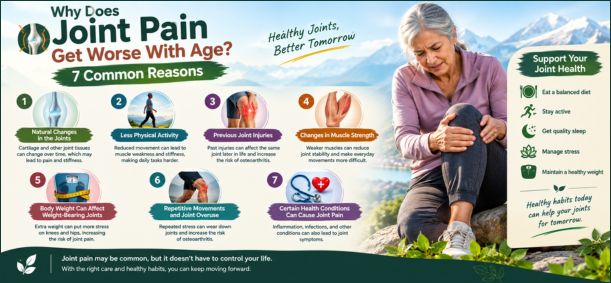
Why Does Joint Pain Get Worse With Age? 7 Common Reasons
Joint pain is often associated with getting older, but age alone is not the only reason joints can become painful or stiff.
As people age, changes can occur in the cartilage, muscles, bones, and other tissues surrounding the joints. Previous injuries, physical inactivity, body weight, repetitive movements, and certain health conditions can also influence joint health.
Osteoarthritis, for example, commonly affects the hands, hips, knees, and other joints. It can cause pain, stiffness, swelling, and reduced movement. Although the risk increases with age, osteoarthritis is not considered an inevitable part of normal aging.
So, why does joint pain sometimes become more noticeable as we get older? Let's explore seven common factors and some practical ways to support healthy joint function.
7 Common Reasons Joint Pain Gets Worse With Age
1Natural Changes in the Joints
One reason joint discomfort can become more common with age is that the structures within and around joints can change over time.
Cartilage helps provide a smooth surface between bones. In conditions such as osteoarthritis, cartilage can gradually break down, while other joint tissues may also change. These changes can contribute to pain and stiffness.
However, aging itself does not mean that everyone will develop significant joint pain.
Individual health, genetics, previous injuries, physical activity, and other factors also matter.
2Less Physical Activity
Source: CDC
Many people become less physically active as they get older.
Long periods of sitting or avoiding movement can contribute to muscle weakness and stiffness. When the muscles surrounding a joint become weaker, everyday activities may become more difficult.
Regular, appropriate movement can help maintain mobility and physical function.
The CDC notes that physical activity can help people with arthritis reduce joint pain and improve function and quality of life.
3Previous Joint Injuries
An injury from years ago can sometimes affect the same joint later in life.
Sports injuries, falls, workplace injuries, and repetitive stress can damage joint structures. Certain previous injuries can increase the risk of osteoarthritis developing in that joint later.
This is why protecting your joints during physical activity and allowing appropriate recovery after an injury is important.
4Changes in Muscle Strength
Muscles play an important role in supporting movement and helping stabilize joints.
As people age, maintaining muscle strength can become increasingly important.
If physical activity decreases significantly, muscle strength may also decline. This can make everyday movements such as climbing stairs, standing up, or walking longer distances more challenging.
A suitable combination of aerobic activity and strength exercises can help support physical function.
5Body Weight Can Affect Weight-Bearing Joints
Source: CDC
Body weight is another factor associated with joint health, particularly for weight-bearing joints such as the knees and hips.
The CDC notes that overweight and obesity are associated with a higher risk of knee osteoarthritis, and extra weight can place greater stress on weight-bearing joints.
This does not mean that every person with joint pain has a weight-related problem.
Instead, maintaining a healthy weight through balanced nutrition and appropriate physical activity can be one part of an overall joint-health strategy.
6Repetitive Movements and Joint Overuse
Certain activities repeatedly place stress on the same joints.
Examples may include:
- Repeated squatting
- Frequent bending
- Heavy lifting
- Repetitive workplace movements
- Certain sports activities
Repeated stress does not automatically cause joint disease, but previous joint overuse or injury can contribute to the risk of osteoarthritis.
Using appropriate technique, taking breaks, and allowing recovery can help reduce unnecessary strain.
7Certain Health Conditions Can Cause Joint Pain
Not all joint pain is caused by aging or osteoarthritis.
Joint symptoms can occur with many different conditions, including inflammatory forms of arthritis, injuries, infections, and other health problems.
This is why persistent joint pain should not automatically be dismissed as "normal aging."
Safety Note
If a joint becomes significantly swollen, red, hot, or unusually painful—or if pain continues for a long period—professional medical evaluation is important.
What Does Joint Pain Usually Feel Like?
Joint problems can present differently from person to person.
Common symptoms may include:
- Aching or pain
- Stiffness
- Swelling
- Tenderness
- Reduced range of movement
- Difficulty performing certain activities
For osteoarthritis, pain may become more noticeable with movement, while stiffness can occur after periods of rest. The exact symptoms depend on the underlying cause.
Can Movement Help Joint Health?
One common misconception is that people with joint pain should avoid movement completely.
In many cases, appropriate physical activity can actually be beneficial. Joint-friendly activities can include:
- Walking
- Swimming
- Cycling
- Gentle yoga
- Stretching
- Water-based exercises
- Appropriate strength training
Source: CDC
The CDC recommends physical activity as an important part of managing arthritis symptoms and notes that activities can be performed in shorter sessions throughout the day.
Safety Note
Exercise should be adapted to the individual's condition. Severe or worsening pain should be discussed with a healthcare professional.
How Can You Support Joint Wellness as You Age?
A few consistent habits can help you maintain mobility and general physical health.
Stay Physically ActiveRegular movement helps maintain muscle strength, flexibility, and physical function.
Maintain a Healthy WeightIf weight management is appropriate for you, gradual and sustainable lifestyle changes are generally preferable to extreme diets.
Eat a Balanced DietInclude a variety of vegetables, fruits, whole grains, pulses, appropriate protein sources, nuts, and seeds.
Protect Your JointsUse appropriate techniques during exercise and physical work, and avoid unnecessary repetitive strain whenever possible.
Don't Ignore Persistent SymptomsRecurring or worsening joint pain deserves appropriate evaluation rather than being automatically attributed to age.
What Is the Ayurvedic Perspective on Joint Wellness?
Ayurveda takes a holistic approach to wellness and traditionally considers lifestyle, diet, daily routines, physical activity, and individual constitution when discussing joint health.
Traditional Ayurvedic approaches to joint wellness may include lifestyle practices, massage, yoga, dietary guidance, and other individualized practices.
At Bhagwati Ayurved, Ayurveda is presented as part of a broader wellness approach that emphasizes balanced routines and healthy living.
People interested in Ayurvedic Medicine for Joint Pain should remember that persistent or severe joint symptoms require appropriate professional assessment. Ayurvedic products or practices should not be used as a substitute for diagnosis or medically recommended treatment.
When Should You Seek Medical Advice?
Joint pain should not always be treated as a normal consequence of getting older.
Consider speaking with a healthcare professional if you experience:
- Persistent or worsening pain
- Significant swelling
- Redness or warmth around a joint
- Severe stiffness
- Difficulty walking or using the affected joint
- Joint pain following an injury
- Fever along with joint symptoms
- Sudden severe joint pain
A professional evaluation can help determine the underlying cause and appropriate management.
Bhagwati Ayurved and Joint Wellness
At Bhagwati Ayurved, we believe that joint wellness involves more than focusing on discomfort alone.
Healthy movement, balanced nutrition, appropriate physical activity, rest, and traditional Ayurvedic lifestyle principles can all form part of a holistic approach to well-being.
Our website also provides educational resources about Joint Pain Medicine, Joint Pain Relief through Ayurveda, and other Ayurvedic approaches to joint wellness.
The goal should be to understand the possible cause of joint discomfort and make informed decisions about appropriate care.
Conclusion
Joint pain can become more common with age, but getting older does not automatically mean that painful joints are unavoidable.
Changes in cartilage and other joint tissues, reduced physical activity, muscle weakness, previous injuries, body weight, repetitive stress, and certain medical conditions can all play a role.
The good news is that healthy habits can support mobility and general joint function. Regular movement, appropriate strength exercises, balanced nutrition, healthy weight management, and timely professional evaluation can all be valuable parts of long-term joint care.
At Bhagwati Ayurved, we encourage people to combine traditional Ayurvedic wellness principles with responsible healthcare and informed decision-making.
Frequently Asked Questions
Is joint pain a normal part of aging?
Joint changes become more common with age, but significant joint pain should not automatically be considered a normal part of getting older. Osteoarthritis is more common with age, but it is not an inevitable part of aging.
Can exercise help with joint pain?
Appropriate physical activity can help reduce arthritis pain and improve physical function. Joint-friendly activities such as walking, swimming, cycling, and suitable strength exercises may be useful.
Can being overweight affect joint health?
Extra body weight can increase stress on weight-bearing joints and is associated with a higher risk of knee osteoarthritis.
Can Ayurveda support joint wellness?
Ayurveda traditionally emphasizes lifestyle, nutrition, movement, massage, and individualized wellness practices. These approaches should complement appropriate medical evaluation and treatment when needed.
When should joint pain be checked by a doctor?
Persistent, severe, worsening, or unexplained joint pain should be evaluated by a healthcare professional, particularly when swelling, redness, warmth, fever, or significant loss of movement is present.